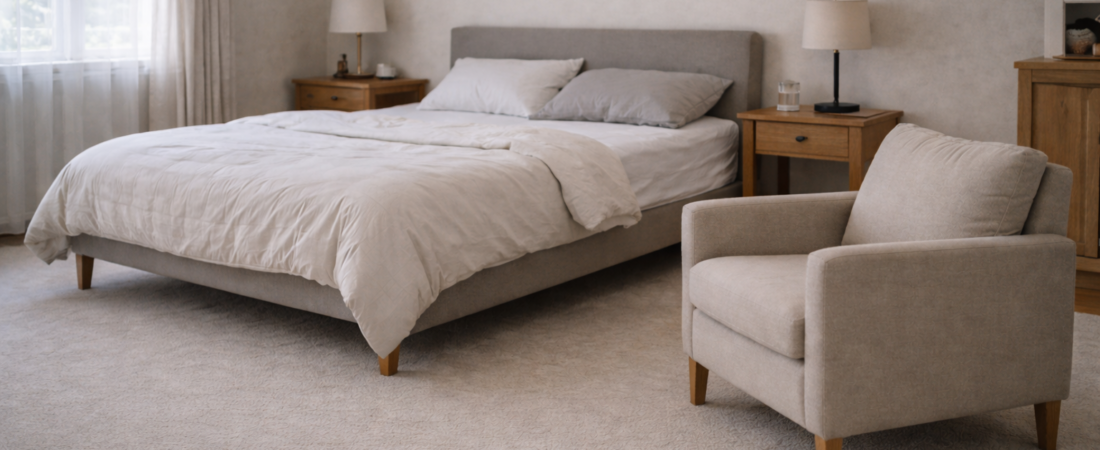
Mobility transfers do not happen in isolation. They are shaped by the spaces where they occur and the way those spaces are arranged.
A well-set-up home environment can quietly support safe movement, while a poorly arranged one can turn even simple transfers into higher-risk situations. Many transfer issues arise not from the person or the technique, but from the surrounding layout, surfaces, and clearances.
Understanding how the home environment influences transfers helps reduce unnecessary strain, hesitation, and loss of balance over time.
Clear Space Supports Controlled Movement
Transfers require room to move, pause, and adjust.
Crowded spaces, narrow pathways, or furniture placed too close together can force awkward body positions and rushed movements. Clear space allows the body to align naturally and gives time to stabilise before and after movement.
This does not require large rooms. It requires intentional spacing where transfers regularly occur.
Floor Surfaces Affect Balance and Confidence
The type and condition of flooring play a significant role in transfer safety.
Slippery surfaces, loose rugs, or uneven transitions between rooms can interfere with footing and weight shifts. Even small changes in surface height or texture can affect balance during standing or pivoting.
Consistent, predictable flooring helps reduce hesitation and unexpected slips.
Furniture Height and Stability Matter
Chairs, beds, and seating surfaces influence how much effort and control a transfer requires.
Surfaces that are too low can make standing difficult, while unstable furniture can shift unexpectedly during movement. A stable surface at an appropriate height supports smoother weight transfer and reduces reliance on momentum.
Furniture does not need to be specialised to be supportive. It needs to be steady and well positioned.
Lighting Shapes Visual Awareness
Poor lighting increases uncertainty during transfers.
Shadows, glare, or dim areas can make it harder to judge distance, edges, and footing. Good lighting supports spatial awareness and helps the body move with more confidence and control.
Lighting is especially important in areas where transfers happen early in the morning or at night.
Pathways Should Match Movement Patterns
The way people naturally move through a space matters.
Frequently used transfer paths should be free from obstacles such as cords, small furniture, or clutter. Doors should open fully, and commonly used items should be placed within easy reach to avoid overreaching or twisting during movement.
Environment setup works best when it follows real movement habits rather than idealised layouts.
Preparation Reduces Mid-Transfer Adjustments
Transfers are safer when the environment is prepared in advance.
Adjusting chair position, ensuring clear landing areas, and checking surfaces before movement begins reduces the need for last-minute changes. Mid-transfer adjustments often introduce instability and increase risk.
A few moments of preparation can prevent many common transfer issues.
Environment Needs Change Over Time
A home setup that once worked well may become less supportive as needs change.
Fatigue levels, strength, balance, and confidence can shift gradually. Regularly reassessing the environment helps ensure it continues to support safe movement rather than create hidden challenges.
Environmental setup should be seen as adaptable, not fixed.
The way a home is arranged plays a quiet but important role in overall mobility transfer safety, shaping how stable and controlled everyday movement can be.
Environment Is Part of Transfer Safety
Safe mobility transfers are not only about technique or effort. They are also about the spaces where movement occurs.
By paying attention to layout, surfaces, lighting, and preparation, the home environment can quietly reduce risk and support safer transfers in everyday life.