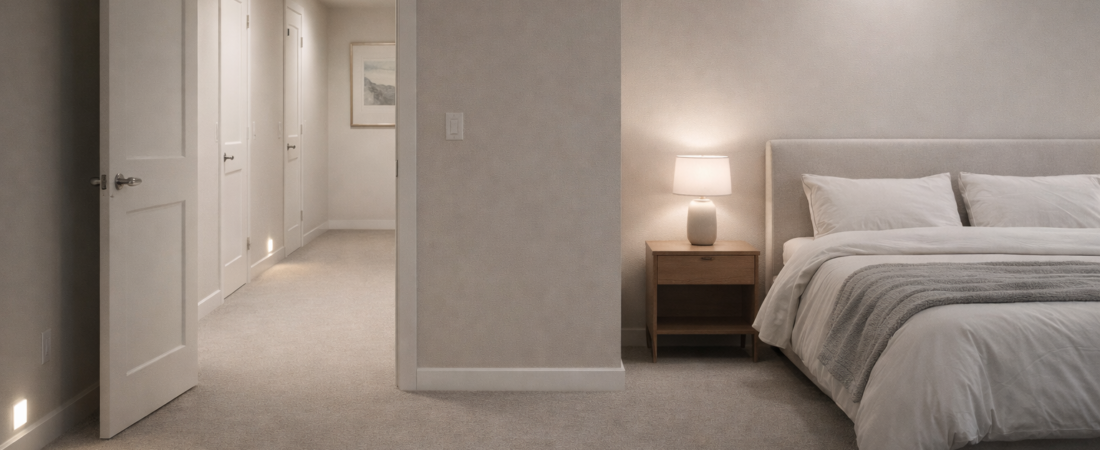
Safe mobility transfers do not depend on strength alone. The surrounding environment plays a quiet but powerful role. Flooring, lighting, and available space can either support steady movement or quietly increase risk.
Understanding these elements helps create conditions where transfers feel more predictable and controlled.
Why the Environment Matters During Transfers
When standing up, sitting down, or moving between surfaces, the body shifts weight quickly. Small environmental factors can affect balance during that shift.
Slippery floors, dim lighting, or tight spaces can make simple movements more demanding. A stable, well-lit, and open area reduces unnecessary strain and supports safer decision-making.
The goal is not perfection. It is predictability.
Flooring: Stability Underfoot
Flooring directly affects grip and balance during transfers.
Surfaces that are too slippery can increase the risk of sliding when standing or pivoting. Surfaces that are too soft or uneven can make footing feel unstable.
Key considerations include:
-
Avoid highly polished or glossy floors in transfer areas
-
Secure loose rugs or remove them entirely
-
Repair uneven transitions between rooms
-
Ensure mats, if used, have non-slip backing
Carpet can sometimes provide better traction than smooth tile, but thick or uneven carpet may create difficulty when repositioning feet.
The most important feature is consistent grip. The surface should feel steady when weight shifts.
Lighting: Seeing Movement Clearly
Transfers often happen during early mornings, evenings, or overnight. Low light reduces depth perception and makes obstacles harder to see.
Good lighting supports balance by allowing the brain to process spatial information clearly.
Helpful adjustments include:
-
Even overhead lighting without strong shadows
-
Bedside lamps that can be switched on easily
-
Nightlights along pathways to the bathroom
-
Light switches within easy reach of the bed or chair
Natural daylight is ideal, but consistent artificial lighting ensures safety at all hours.
Lighting should illuminate the floor surface, not just the upper part of the room.
Space: Room to Move Without Obstruction
Transfers require space for foot placement and turning.
Crowded areas increase the need for twisting or side-stepping, which can reduce stability. Clear, open floor space allows smoother, more controlled movement.
Consider:
-
Enough room beside the bed for both feet to rest flat
-
Clear space in front of chairs before standing
-
Removal of small furniture or decorative items in pathways
-
Stable surfaces nearby that can provide light support if needed
The goal is not to make a room empty. It is to create a predictable movement zone around key transfer areas.
Consistency Across the Home
Transfers do not only happen in one location. Bedroom, bathroom, living room, and entry areas all matter.
Keeping flooring type, lighting levels, and layout relatively consistent between rooms reduces the need for constant adjustment.
Sudden changes — such as stepping from carpet onto smooth tile in low light — can challenge balance.
Consistency supports confidence.
Small Adjustments, Meaningful Impact
Environmental safety does not require major renovation.
Often, improvements come from:
-
Repositioning furniture
-
Increasing light levels
-
Removing loose floor coverings
-
Improving visibility of edges or transitions
These changes reduce uncertainty and allow attention to stay focused on movement rather than surroundings.
Safe transfers are supported by calm, well-prepared spaces. Flooring, lighting, and room layout work quietly in the background — but their impact is significant.
For a broader understanding of how the home environment influences safety during transfers, see How Home Layout Affects Transfer Safety.