Many everyday transfers can be performed safely using body positioning, stable furniture, and thoughtful movement.
However, there are situations where simple equipment may help make a transfer safer or easier. In these situations, equipment is not meant to replace personal ability, but to support it.
Understanding when equipment may be helpful can allow individuals and caregivers to make more thoughtful decisions about safety and independence at home.
Why Equipment Is Sometimes Helpful
Transfers involve shifting body weight while maintaining balance and control. This can become more challenging when certain physical changes occur.
For example, a person may experience:
-
Reduced leg strength
-
Limited balance or stability
-
Joint stiffness or pain
-
Difficulty standing from low surfaces
-
Fatigue during repeated movements
When these challenges are present, small pieces of assistive equipment may provide additional stability, leverage, or height support.
The goal is not to rely on equipment unnecessarily, but to reduce strain and improve control during the movement.
Situations Where Equipment May Help
Equipment is often considered when a person begins to notice that a previously easy transfer now feels less stable or more physically demanding.
Some common situations include:
Standing From Lower Seating
Low sofas, deep lounge chairs, and soft cushions can make standing more difficult because they place the hips below knee level.
In these situations, equipment that raises seat height or provides a stable handhold may reduce the effort required to stand.
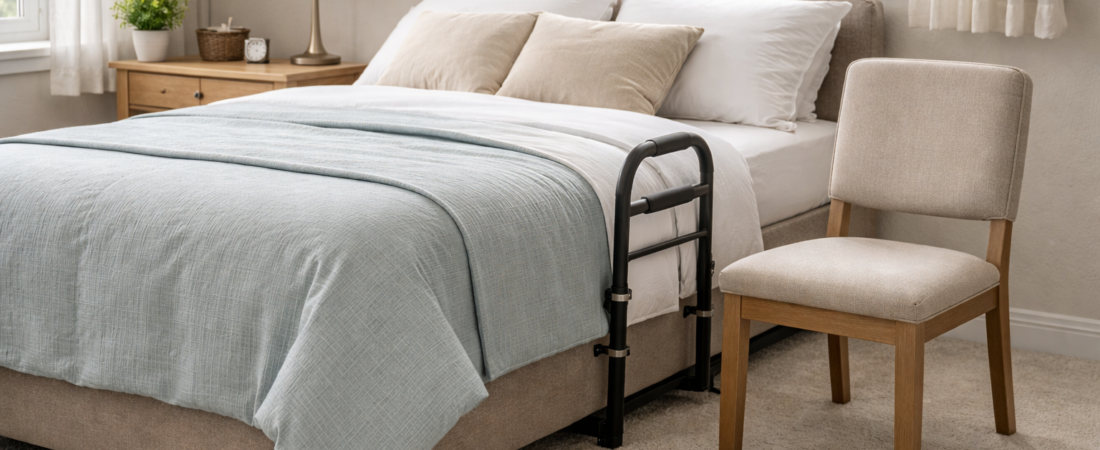
Transfers In and Out of Bed
Bed transfers sometimes require repositioning from lying to sitting and then standing.
If the mattress is low, soft, or difficult to push against, supportive equipment may help provide leverage or stability while moving into a seated position.
Bathroom Transfers
Bathrooms often involve smaller spaces and hard surfaces.
Transfers involving toilets, bathtubs, or showers may feel less stable due to limited handholds or slippery flooring. In these environments, supportive equipment may help provide controlled hand placement or additional height.
Wheelchair or Mobility Device Transfers
When transferring between a wheelchair and another surface, maintaining alignment and balance can be important.
Certain equipment may help bridge small gaps or create a more stable transfer surface.
Equipment Should Match the Situation
Assistive equipment works best when it addresses a specific movement challenge.
For example, equipment designed to increase seat height serves a different purpose than equipment intended to provide a handhold during standing.
Using equipment that does not match the movement need can sometimes create new difficulties rather than solving the original problem.
For this reason, it is usually helpful to think about which part of the transfer feels difficult, rather than choosing equipment first.
Environment Still Matters
Even when equipment is used, the surrounding environment remains an important part of transfer safety.
Stable flooring, adequate space to move, and furniture that does not slide or shift all contribute to safer transfers.
Equipment works best when it supports an already stable environment rather than trying to compensate for an unstable one.
Equipment Is Only One Part of Transfer Safety
Safe transfers usually rely on a combination of factors:
-
Clear movement planning
-
Stable surfaces
-
Appropriate body positioning
-
Adequate lighting
-
Equipment when needed
Equipment can be helpful in some situations, but it is rarely the only factor that determines whether a transfer feels safe or controlled.
Understanding how the movement works often comes first.
For a broader overview of the types of equipment sometimes used to support transfers, see Overview of Common Transfer Aids.